Colleges lose millions to students who just needed a text.
The withdrawal gets filed in May. The student stopped showing up in September. AttendanceData catches the second missed class and reaches out that same afternoon — automatically. The professor does nothing. The student comes back.
Always free for individual instructors — unlimited classes and sessions. No student fee. No classroom hardware.
What is walking out of your campus this term?
1,800
students miss two classes this term — mostly unnoticed
$64.8M
in future tuition riding on whether they come back
1,656
back in their seats when the nudge is automatic
Illustrative: assumes 12% of students miss two classes, $18K annual tuition, two years remaining, and the observed 92% return rate.
Run your real numbersThe human moment
He didn’t want to drop out. He felt invisible.
Miss two classes and the nudge goes out the same day — every time, for every student. Over 92% come back.
Wednesday 2:15 PM
2:42 PM
Friday — checked in
92%+
of nudged students returned to class
8s
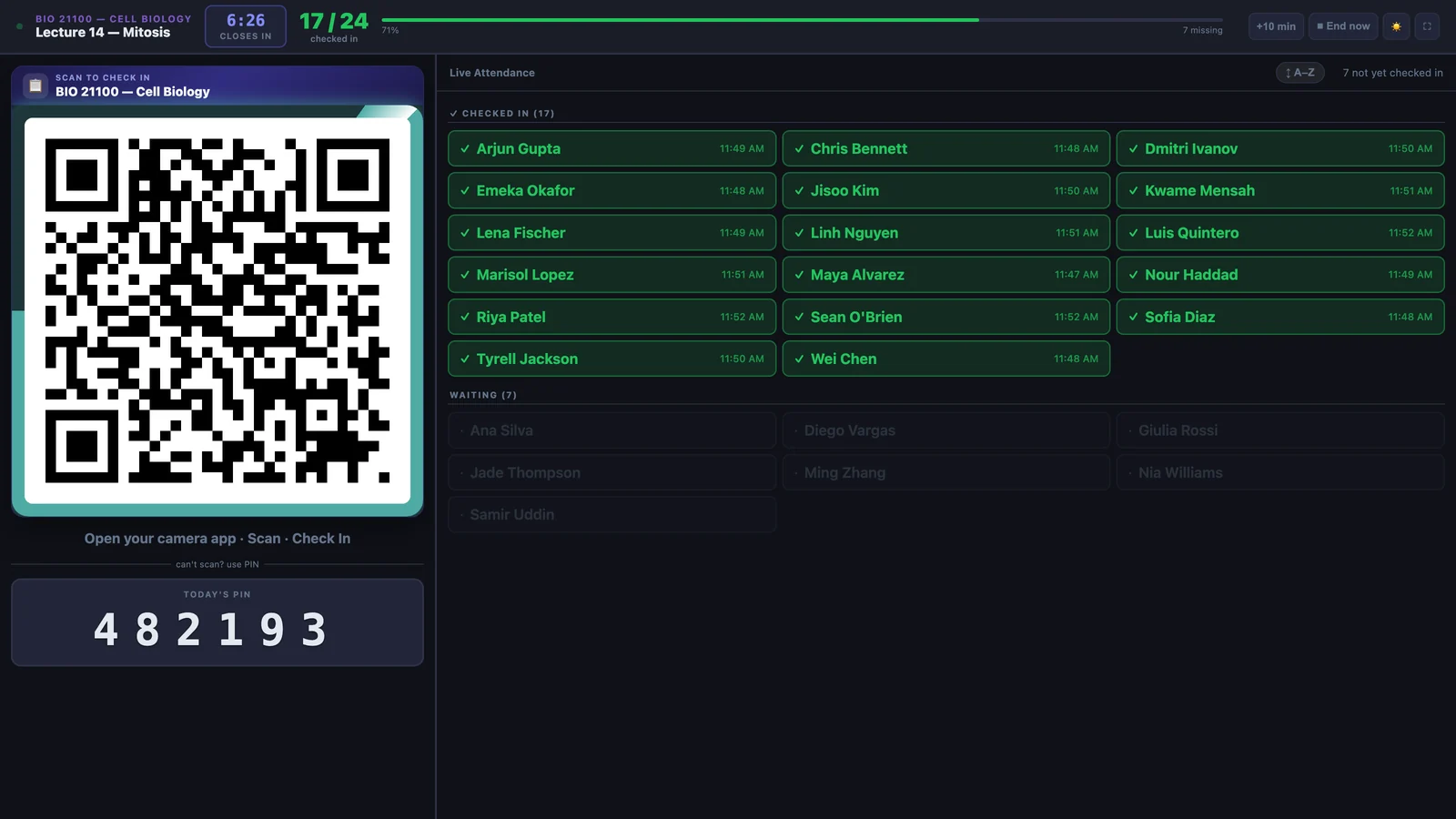
for a student to check in
0
extra steps for the professor
Illustrative exchange. Return rate observed across AttendanceData sessions where the automatic nudge was sent.
Two realities
Same student. Same second absence. Two very different Mays.
Without AttendanceData
Week 3
Maya misses her second BIO lecture. Nobody notices.
Week 7
Midterm grades post. She is already far behind.
Week 12
An advisor finally reaches out. No reply.
May
Withdrawal filed. Years of tuition leave with her.
With AttendanceData
Week 3, 2:15 PM
Second absence recorded from an 8-second check-in.
Week 3, 2:16 PM
A warm, automatic nudge reaches Maya's phone.
Week 3, Friday
Maya is back in her seat — like over 92% of nudged students.
May
She registers for fall. The seat stays filled.
For professors
Attendance handles itself, and so does the follow-up. You teach; the app nudges the students who stop showing up. Grading, exports, and the term record are ready when you are.
For instructorsFor provosts
Every seat you keep enrolled is tuition you don’t have to re-recruit. Persistence term to term is the whole game — and it starts with knowing who stopped attending in week three.
For institutionsFor university leaders
Full tuition revenue is only realized when students stay to graduation. See the students drifting while you can still act — not on the withdrawal report.
Model your revenue at riskThe cost of waiting
Your retention strategy is what happens in week three — or it is regret in May.
Most campuses learn a student is gone when the withdrawal is filed. By then, a sophomore has taken four more semesters of tuition with them — and the seat rarely refills. AttendanceData turns the invisible second absence into an automatic intervention, campus-wide.
Week 3
The student stops attending. AttendanceData sees it and the nudge goes out automatically.
Week 8
Midterm warnings arrive — elsewhere, this is the first signal most campuses get.
End of term
The withdrawal is filed. Without a shared attendance record, this is the first hard data — and it is too late.
Real-world plays
Start with what needs to happen this week.
Automate the follow-up
A student misses twice; the nudge goes out the same day. Over 92% come back.
Make attendance count
Use a clear session record to apply the policy in your syllabus.
Model retained tuition
Connect earlier intervention to a transparent financial scenario.
Start where you are
Protect your next cohort.
Every missed class is a data point. Start collecting yours.